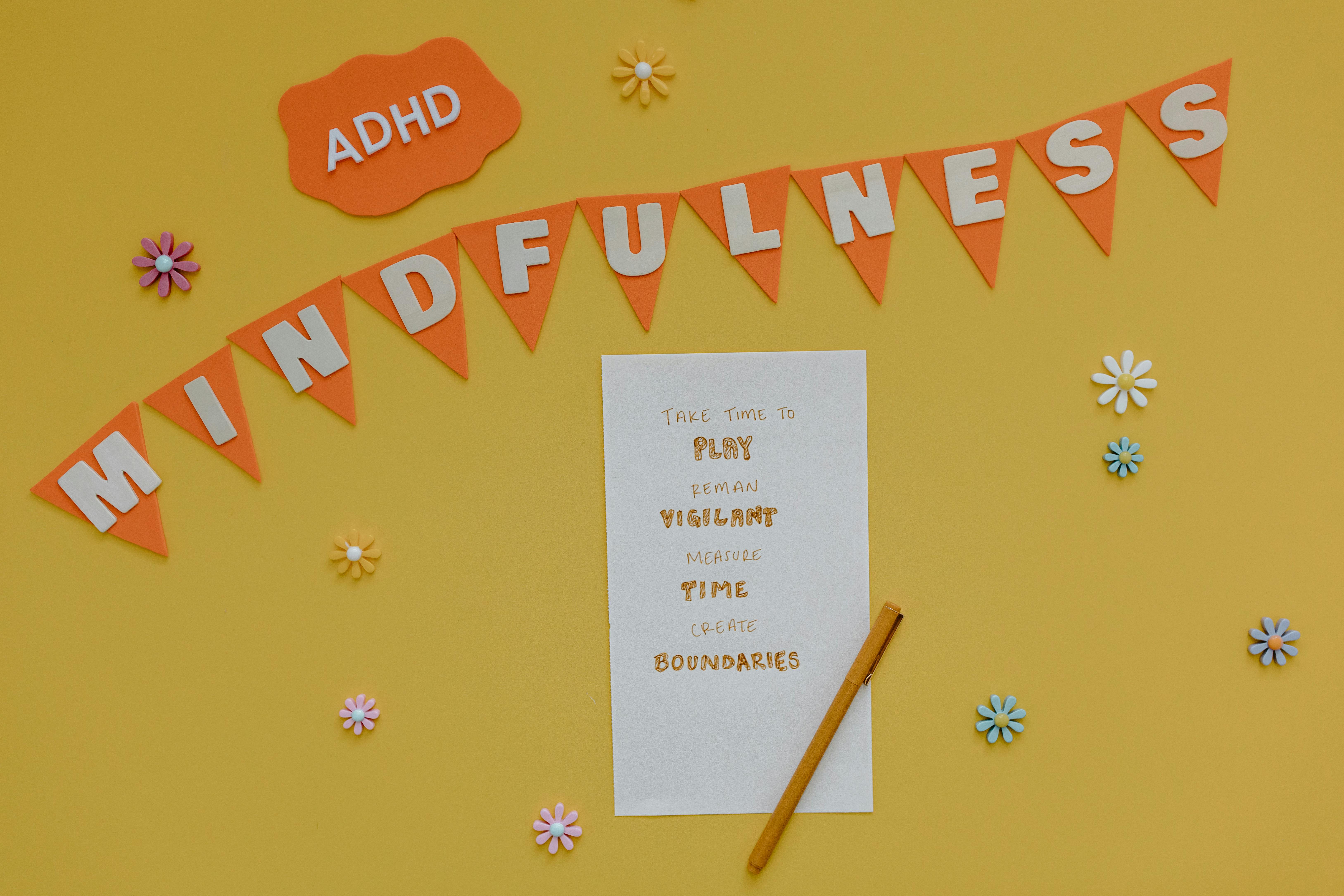
If you have spent years learning to hide your ADHD symptoms by mimicking neurotypical behavior, you are not alone. ADHD masking is the exhausting work of suppressing fidgets, rehearsing conversations, hiding overwhelm, and pretending tasks come easily. ADHD unmasking strategies start with one counterintuitive step: dropping the performance, even if only for a few minutes at a time.
Masking is a survival skill you developed long before you knew you had ADHD. But what helped you get through school or hold down a job is now burning you out. The strategies that follow are not about quitting your job or announcing your diagnosis to everyone you know. They are about bringing your full self into more of your life, one intentional decision at a time. For foundational self-care approaches, our guide to ADHD self-care strategies covers the daily practices that support this work.
Photo: Tara Winstead / Pexels
Why "Just Be Yourself" Does Not Work for ADHD
"Just be yourself" sounds like the simplest advice in the world. For someone with ADHD, it can feel terrifying. After years of being told you talk too much, interrupt, forget things, or are too intense, the mask feels safer than the alternative. The fear is not irrational. Many adults with ADHD have real memories of being punished or rejected for traits they could not control.
ADHD masking means hiding your symptoms to appear neurotypical. It drains energy, delays diagnosis, and increases the risk of anxiety and burnout. Unmasking is the practice of reducing those hidden behaviors in situations where it is safe to do so.
A 2022 study in the Journal of Attention Disorders found that adults who mask their ADHD symptoms at high levels report significantly lower quality of life and higher psychological distress. The cost of masking is measurable: chronic stress, identity confusion, and a persistent sense that no one actually knows who you are. Understanding how emotional dysregulation feeds into this cycle can help you separate your ADHD wiring from the shame that masking creates.
The alternative is not to drop the mask everywhere at once. It is to practice unmasking in specific, low-risk situations until the fear subsides and authentic interactions show you that the mask was never protecting you as well as you thought.
Reality Check
"Just be yourself" ignores the fact that you have been punished for being yourself before. Unmasking is a skill you rebuild, not a switch you flip.
The Strategies
1. Name the Mask First
Before you can drop a mask, you have to know it is there. Spend one week noticing when you shift into masking mode. Are you nodding along when you are lost? Forcing eye contact even though it hurts? Adding extra words to hide your verbal processing speed? Keep a note on your phone for three days. Just observe. Do not try to change anything yet. Naming the mask removes its invisibility, and that alone reduces its power.
2. Start with One Safe Space
Choose one relationship or environment where the stakes are low. A close friend who already knows you have ADHD. A solo coffee shop run where no one expects polished conversation. A therapy session. Commit to dropping one specific mask behavior in that space for one week. If you usually force eye contact, let your gaze drift. If you usually pretend you heard the full instruction, ask for it again. One safe space builds the evidence your brain needs: nothing bad happened.
3. Audit Your Energy Cost
Masking consumes cognitive bandwidth you could use for things that matter. For one day, estimate what percentage of your social energy went to pretending versus actually connecting. People with ADHD often spend 40 to 60 percent of their social battery on managing how they appear. That leaves very little for the conversation itself. When you map the energy cost, the choice to unmask becomes less about courage and more about math. You cannot afford to keep paying.
4. Create Unmasking Scripts
The fear of unmasking often comes from not knowing what to say. Have a few scripts ready. "I need a moment to process what you said." "I heard you, but I am going to write it down so I do not forget." "I focus better when I move around, mind if I stand?" These are not confessions. They are neutral explanations that make room for your needs without apologizing. Practice one script this week and notice how rarely people push back.
5. Find Neurodivergent Community
Unmasking is hard when you are the only person in the room whose brain works this way. Seek out spaces where your natural communication style is the norm. ADHD support groups, neurodivergent coworking sessions, online communities, or even one friend who also has ADHD. When you experience what it feels like to not have to translate yourself, the motivation to unmask in other areas grows naturally.
6. Disclose Selectively
Disclosure is not an all-or-nothing decision. You can tell one person and not another. You can share about sensory needs without mentioning a diagnosis. You can say "I work best with written instructions" without explaining why. Disclosure is a tool you use when the return on authenticity is higher than the cost. Our directory includes providers who specialize in late-diagnosis ADHD and can help you navigate disclosure decisions at work and in relationships.
7. Redefine Professionalism
Most workplace norms were written for neurotypical brains. The expectation to sit still, make eye contact, and respond instantly is not a measure of competence. It is a measure of conformity. Experiment with one adjustment: let your hands move during meetings, type notes instead of maintaining eye contact, or ask for agenda items in advance. Do this alongside work product that speaks for itself. Results are harder to argue with than posture. If workplace masking has already led to burnout, our guide to ADHD workplace burnout recovery offers targeted strategies for that specific challenge.
8. Let Yourself Be Unfinished
One of the most draining masks is the "I have it together" performance. The pressure to arrive on time, remember everything, and respond perfectly is a setup for shame. Try arriving to one social event or meeting without a perfect excuse for your chaos. Say "my brain is a little scattered today" and watch how often people nod instead of judge. The unfinished version of you is more relatable than the polished one.
If you have tried unmasking strategies and keep hitting the same walls, working with a therapist who understands late-diagnosis ADHD can make the difference between knowing what to do and actually doing it. Our directory lets you filter by specialization, insurance, and location to find someone who fits your specific situation.
Find a Provider9. Build a Daily Authenticity Practice
Unmasking is a muscle, not a destination. Create one small practice that reminds you who you are without the filter. Five minutes of stimming without guilt. Leaving one thought unedited in a text message. Wearing the clothes you actually want to wear instead of the ones that blend in. These micro-moments of authenticity rebuild your tolerance for being seen. Over months, they shift your baseline from hiding to living.
Which Strategy Fits Your Situation
| If you tend to... | Try this first |
|---|---|
| Feel exhausted after every social interaction | Strategy 3: Audit Your Energy Cost |
| Have no idea where you are masking vs. being real | Strategy 1: Name the Mask First |
| Panic at the thought of someone seeing your ADHD | Strategy 2: Start with One Safe Space |
| Struggle to explain your needs without over-explaining | Strategy 4: Create Unmasking Scripts |
| Feel isolated and like no one gets it | Strategy 5: Find Neurodivergent Community |
| Worry about unmasking at work | Strategy 7: Redefine Professionalism |
How to Actually Stick With One
The hardest part of unmasking is not choosing a strategy. It is using it consistently enough to see that nothing bad happens. Pick exactly one from the matchmaker table above. Use it for two weeks before adding another. When you forget for three days in a row, restart without shame. Your brain learned to mask over years of reinforcement. Unlearning it will take months, and that is normal. The goal is not perfection. The goal is a slightly lighter load than yesterday.
Warning
Trying all nine strategies at once is a recipe for overwhelm. You will feel like you are failing at unmasking itself, which defeats the purpose. Pick one. Give it two weeks. Then evaluate.
What to Do When Nothing Clicks
If you have tried reducing the mask and nothing shifts, the barrier may not be strategy. It may be burnout, untreated anxiety, or a mismatch between your environment and your needs. When you are running on empty, your brain does not have the bandwidth to experiment with new behaviors. Address sleep, therapy, or medication fit first. For readers whose struggle shows up as decision paralysis when facing these choices, that article breaks down the first step into something manageable. The directory of providers on this site includes specialists who can help you figure out which layer needs attention before behavior change can stick. For example, Your Bright Side Counseling Practice in Orlando, Florida, specializes in late-diagnosis ADHD and offers telehealth sessions that include both CBT and mindfulness approaches.
Solution
If you have been trying to unmask alone and hitting the same wall, an ADHD-informed therapist can help identify what is blocking progress. That is what they are trained for.
Frequently Asked Questions
What is the difference between ADHD masking and being polite?
Being polite is adapting to social norms temporarily. Masking is hiding core parts of how your brain works to avoid rejection. Politeness costs a moment. Masking costs years of energy.
How do I know if I am masking ADHD?
If you regularly feel drained after social situations, rehearse conversations in advance, suppress physical impulses, or pretend to understand instructions you did not follow, you are likely masking. The first step is naming it.
Can unmasking make my ADHD symptoms worse?
Unmasking does not create new symptoms. It reveals existing ones you have been hiding. This can feel worse at first because you become more aware of the struggle, but awareness is the first step toward managing it effectively.
Is it safe to unmask at work?
It depends on your workplace culture. Start with low-risk adjustments: written instructions, movement breaks, noise-canceling headphones. For disclosure decisions, talk to a therapist who understands workplace accommodations.
How long does unmasking take?
There is no finish line. Most adults with ADHD describe unmasking as a gradual process that unfolds over months and years. The goal is not to stop masking entirely. It is to mask less and choose consciously when you do.
Pick One and Start
Pick the strategy that feels least threatening, not the one that sounds most impressive. If that is "Name the Mask First," set a reminder on your phone for tomorrow morning and spend the day watching yourself. That is it. Success is noticing one mask behavior, not changing it. ADHD unmasking is a long game, and the first move is simply paying attention.
Browse the directory to find an ADHD specialist who understands late-diagnosis and identity work.
Related: How to Rest With ADHD: 8 Types of Rest That Actually Recharge You This article is for informational purposes only and is not a substitute for professional medical advice, diagnosis, or treatment. Always seek the guidance of a qualified healthcare provider with any questions you may have regarding a medical condition.